
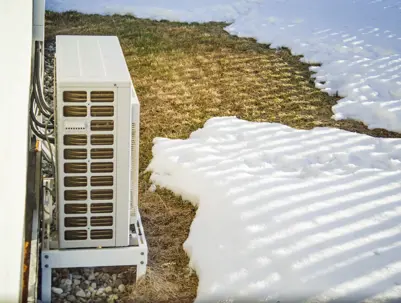
If you have ever glanced out your window on a chilly, damp winter afternoon and noticed your outdoor heating unit running without its fan, making a low humming sound, or even releasing a light cloud of steam, your first instinct might be to panic. It is incredibly common for homeowners to worry that their heating system is breaking down right when they need it most. However, if you are running an all-electric system in Washington State, there is a very high probability that you are simply witnessing a normal, automatic process known as defrost mode.
To make sure your comfort system stays reliable and operates at peak performance, booking an expert heat pump service in Seattle, WA ensures that these automatic cycles are running exactly as they should during our coldest months.
The Science Behind the Frost
To understand why your system enters defrost mode, it helps to look at how it keeps you warm. Unlike traditional furnaces that burn fuel to create heat, a heat pump acts as a heat transporter. Even during a crisp Northwest winter, the outdoor air contains ambient heat energy that can be harvested.
Heat Extraction: Your system uses a specialized refrigerant to pull warmth from the outside air and bring it indoors.
Freezing Coils: Because the outdoor coil must be colder than the surrounding air to capture heat, its temperature frequently drops below freezing even when the actual air temperature is in the 30s or 40s.
Ice Insulates: When our signature Seattle moisture meets that freezing metal coil, frost naturally accumulates. If left alone, this ice would quickly choke off necessary airflow and severely drop your system's efficiency.
How Defrost Mode Works
Defrost mode is your system’s built-in self-defense mechanism against freezing weather. Modern systems are engineered with advanced sensors that actively monitor the outdoor coil's temperature and pressure changes. The moment these sensors register a specific level of frost accumulation, the machine temporarily takes action to protect itself.
Reversing the Valve: The system briefly shifts into a cooling cycle, diverting warm refrigerant back to the exterior coil rather than pulling heat indoors.
Shutting Down the Fan: To speed up the melting process and keep cold air from blowing around the unit, the outdoor fan shuts off completely.
Creating Steam: As the ice rapidly liquefies and evaporates off the hot coils, a harmless cloud of water vapor, or steam, rises into the air; it can look alarming, but is totally normal.
What You Experience Indoors
You might wonder if this temporary cooling cycle means your indoor spaces will suddenly get cold. If you own an advanced system, like the ones designed by Mitsubishi Electric, you will barely notice a difference.
The indoor fan will typically slow down or pause entirely to avoid circulating unheated air.
If your system includes auxiliary backup heat strips, those will automatically kick on to maintain a completely stable, cozy indoor temperature until the cycle concludes.
A standard defrost cycle is incredibly brief, usually wrapping up in 3 to 15 minutes, depending on outdoor humidity and the exact model you own.
When to Call the Professionals
While occasional frost and steam are signs of a healthy, self-protective system, winter weather or component wear can sometimes cause mechanical issues. You should reach out for professional help if you notice any of the following warning signs:
The outdoor unit becomes completely encased in thick, solid ice that never seems to melt away.
Your system is entering defrost mode constantly or blowing cold air inside for extended periods.
A faulty sensor, low refrigerant levels, or restricted airflow is preventing the system from completing its normal cycle.
Ready to Maximize Your Home Comfort?
At Progressive Comfort Solutions, we are dedicated to ensuring your home remains a sanctuary of efficient, year-round comfort. As specialized heat pump professionals, our in-house technical team is fully equipped to inspect, tune up, and service your comfort systems so they handle our local winter elements effortlessly.
If you notice unusual ice buildup or simply want to schedule a seasonal maintenance check to maximize your system's lifespan, reach out to our team directly at (206) 887-9077.